The capital, Las Palmas de Gran Canaria, is a working port, and most of it is a modern city of offices, flats and traffic. At its southern end, though, are the two quarters where it began. Vegueta is the oldest: a web of cobbled streets around a cathedral square, with low colour-washed houses, wooden balconies and inner courtyards. Triana, just to the north, is the old shopping district, with a long pedestrian street at its heart.
Together they make a rewarding day out in the capital for anyone staying on the south coast, and they are compact enough to cover on foot between breakfast and early evening without hurrying. This guide gives a route in a sensible order, where to break for food, and how to get there from the resorts without losing half the day to parking.
It is a walking day, not a museum marathon. The point is the streets themselves: the square, the lanes, the balconies and the shop fronts, with one or two museums chosen in advance rather than all of them attempted.
How the two quarters fit together
Vegueta sits at the south end of the centre, next to the Avenida Marítima, the coast road along which the GC-1 enters the city. That puts it on the side of town nearest the airport, and it is the first part a driver from the south reaches. Triana starts immediately to the north. Between them runs a busy road along the course of the Guiniguada, the ravine that once divided the two, and crossings link one side to the other.
The shape of the day follows from that. Vegueta is quieter and more residential, with churches, old houses and museums, and it is most pleasant in the cooler, emptier hours of the morning. Triana is livelier, with shops and cafés, and it suits the afternoon. The whole walk, from the cathedral square to the park at the far end of Triana, is short, and the time goes on stopping rather than on distance.
Both quarters are made for feet rather than cars. Streets are narrow, many are pedestrian, and the cobbles in Vegueta are uneven, so comfortable shoes matter more than they seem to at breakfast.
Getting there from the south coast
By car the run is straightforward: north up the GC-1, which becomes the seafront road into the city. By the routed drive, the centre of Las Palmas is 47 minutes from Playa del Inglés and 51 minutes from Meloneras, and 27 minutes from the airport. These are free-flow times, so leave room for traffic on a weekday morning.
The catch is parking. Parking on the street is regulated: pay for the blue bays, which allow two hours at most, and leave the green ones to residents. The ticket comes from the meter or the city's parking app, and it has to carry the car's number plate. Two hours is not a day, so for a full day the car belongs in a car park rather than on the street, and it is worth deciding which one before setting off.
The alternative is the bus. Buses link the southern resorts with the capital, and there is a bus station at San Telmo, at the northern end of Triana. Arriving that way simply reverses the route below: start in Triana, walk south, and finish in Vegueta. A taxi is the other option for the short hops within the city, or for the return after a late dinner.
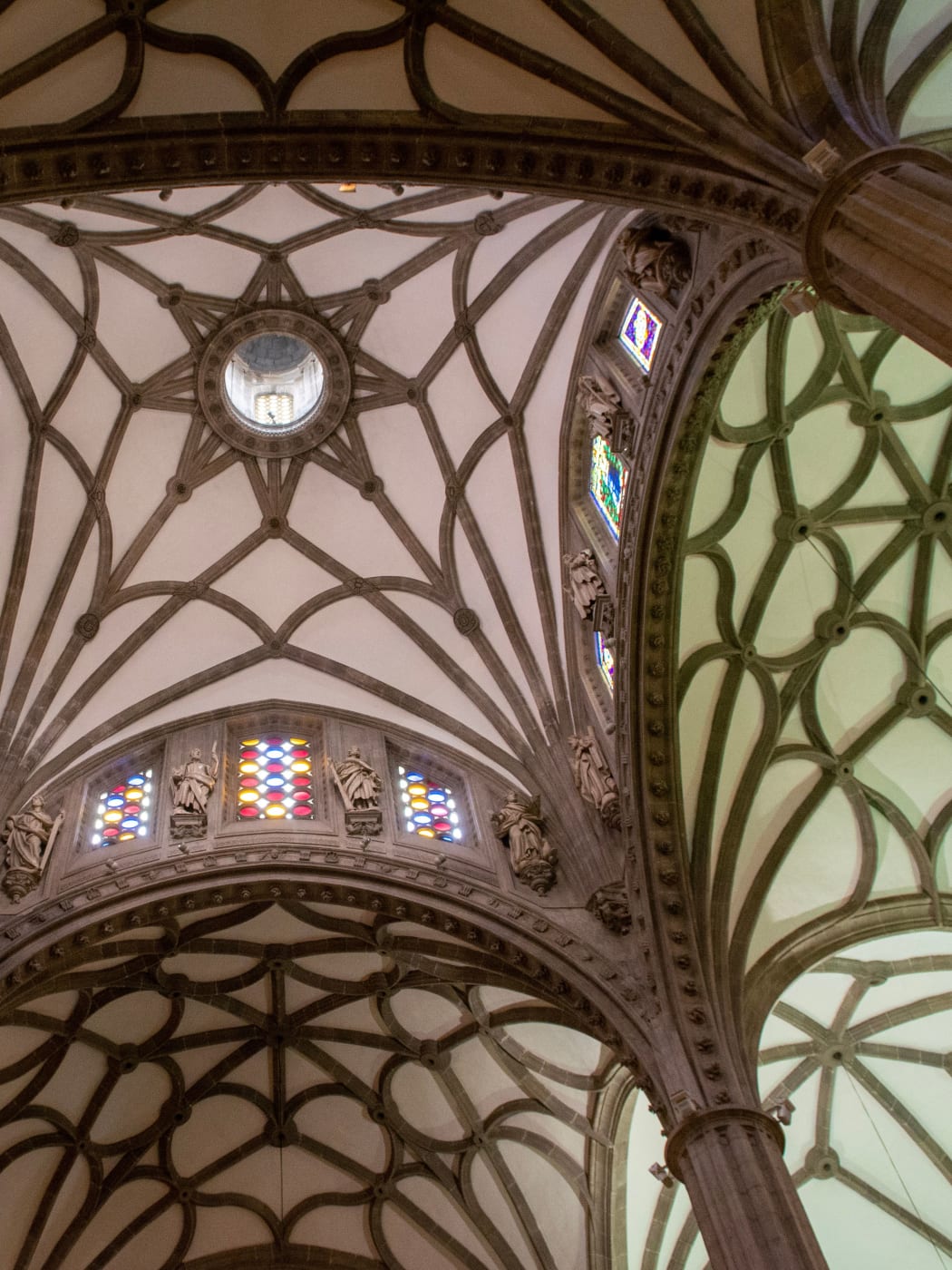
The cathedral and the Plaza de Santa Ana
Start at the heart of Vegueta, the Plaza de Santa Ana. The cathedral of Santa Ana fills one side of the square, and the old town hall faces it across the open paving. The square is wide, bright and uncluttered, and in the morning it is quiet enough to take in properly. Look for the bronze dogs that line the square, a nod to the old story that the islands took their name from dogs.
The cathedral was a long time in the building, and it shows: the front is neoclassical, while the interior is Gothic, with slender columns rising into ribbed vaults that spread out across the ceiling. Seeing the inside is worth the time even for visitors with no particular interest in churches, because the vaulting is one of the most striking sights in the old town.
Remember that it is a working cathedral. Check before going whether the interior can be visited on the day, and treat it as a place of worship rather than a museum. The square itself costs nothing, and it is the natural point to get bearings, with the lanes of Vegueta running off it in every direction.
The cobbled streets of Vegueta
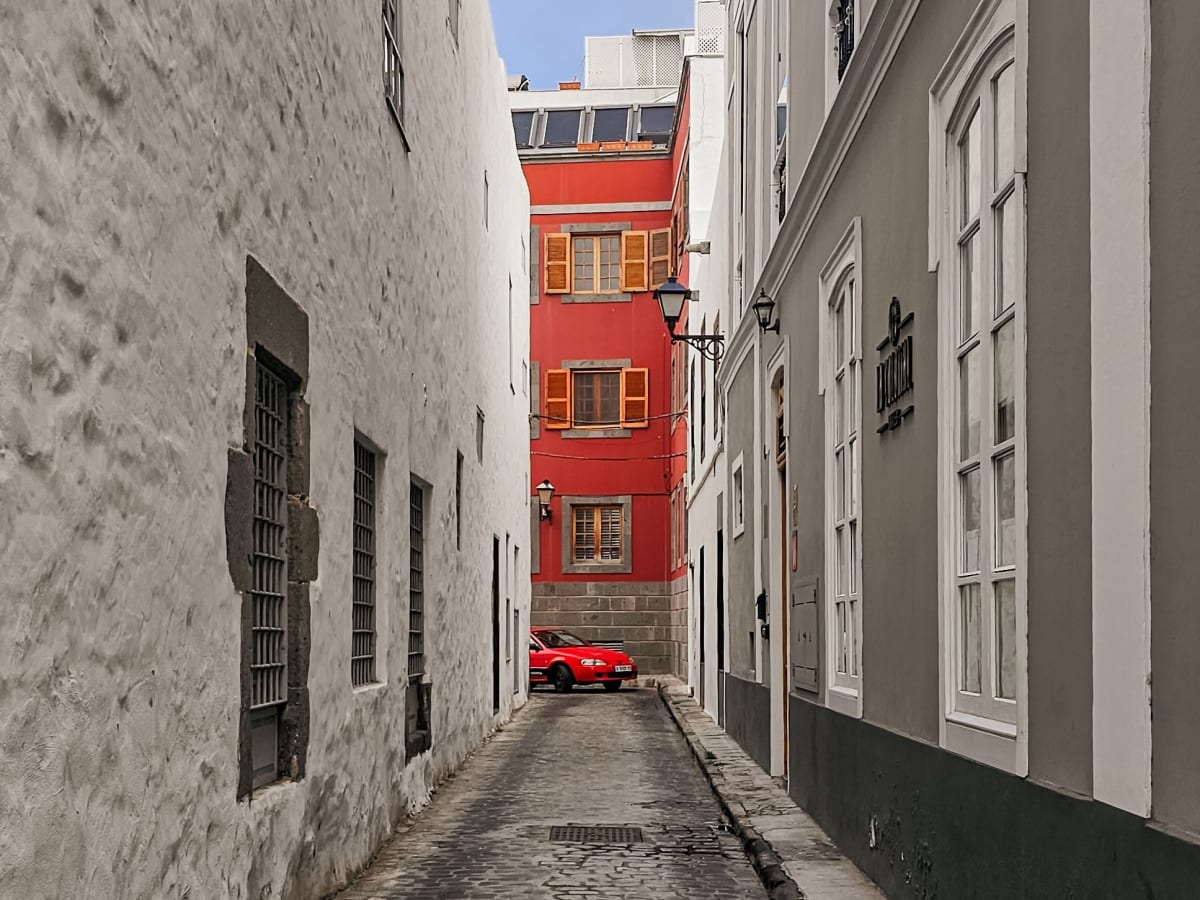
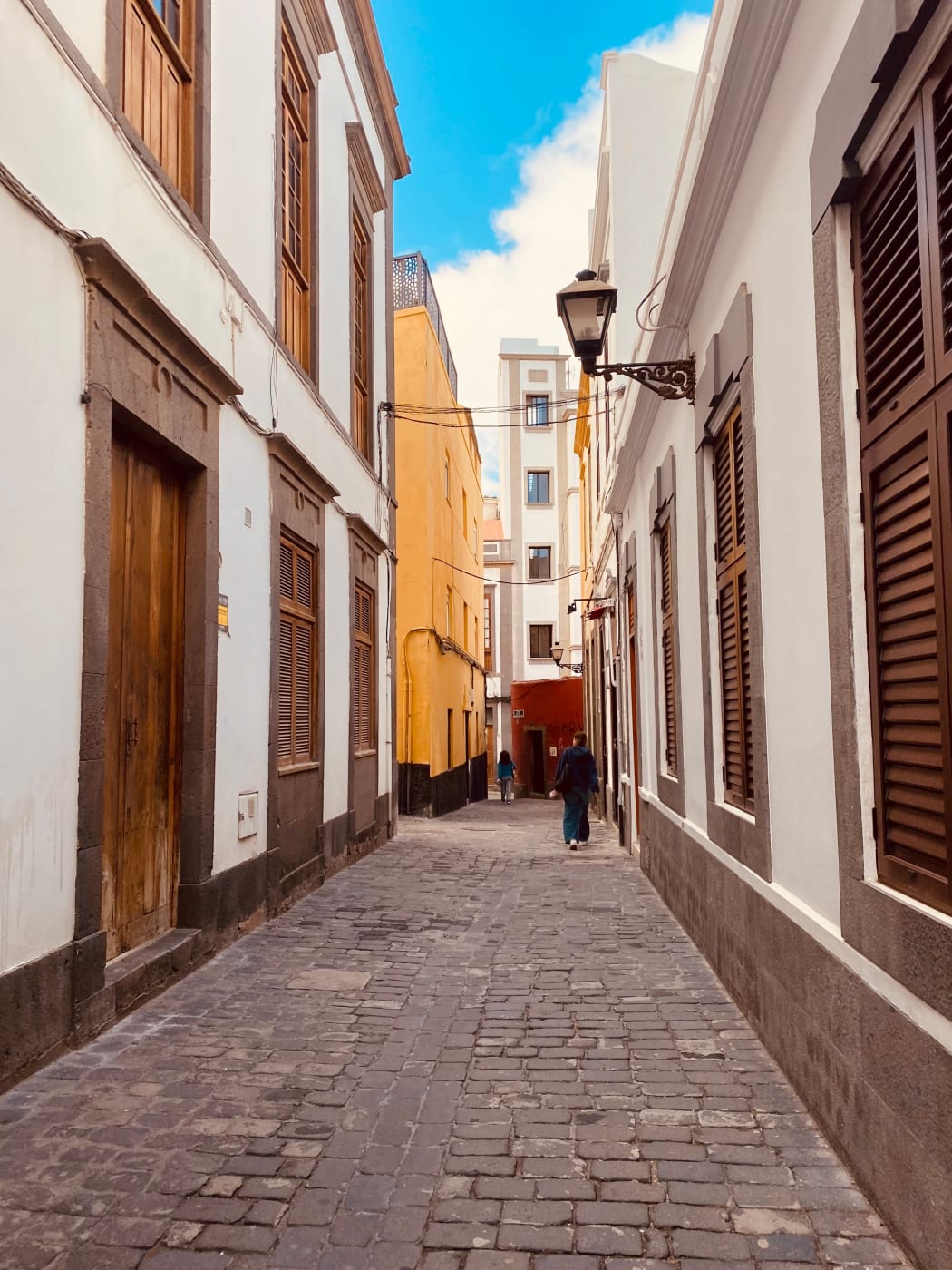
From the square, give the rest of the morning to the lanes around it. This is the quarter where Las Palmas began, and its streets are narrow and cobbled, lined with low houses painted white, ochre and red, with dark stone framing the doorways and windows. Many have wooden balconies and shutters, and a door left open often shows an inner courtyard with plants and a gallery above.
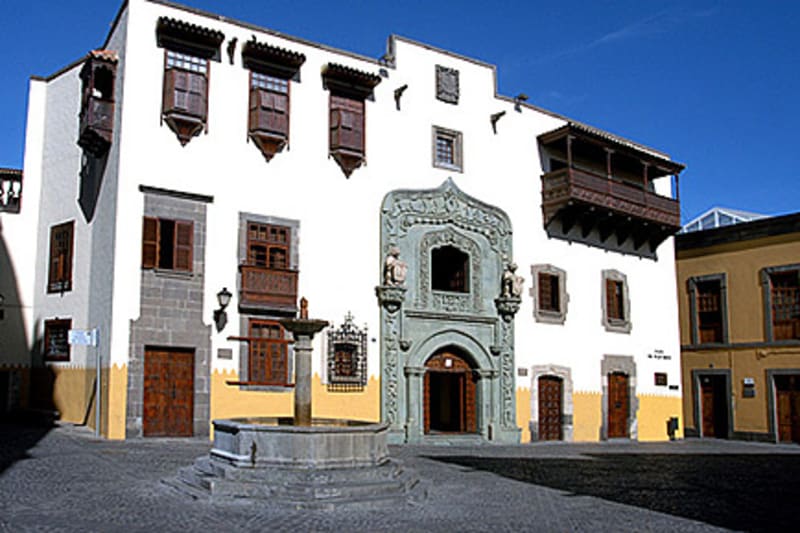
A number of the old houses now hold museums. On a one-day visit, choose one or two in advance rather than trying them all. The Casa de Colón, a short walk from the square, is dedicated to Columbus and his voyages, and the Museo Canario covers the island and its people before the Spanish conquest. Opening days vary, so check them before building the morning around either.
For the rest, walk without a plan. The quarter is small enough that getting lost is impossible for long, and every few streets bring out another small square or church. Keep an eye on the uneven cobbles and on the occasional car, since some streets still take traffic, and look up, because the balconies are easy to miss at street level.
Lunch between the two quarters
By the middle of the day the sensible move is to head towards the edge of Vegueta, near the food market and the road that divides it from Triana. The market is a covered hall selling fruit, vegetables, fish and meat, and it is worth a walk through even for someone not buying, if only to see what the island grows and lands.
The streets around it, and the lanes running back into Vegueta, have bars and small restaurants for a sit-down lunch. The thing to order at least once is papas arrugadas: small potatoes boiled in salted water until the skins wrinkle, served with mojo, a sauce of peppers and garlic in its red form or herbs in its green. Grilled local fish and cheese from the island turn up on most menus too.
Lunch is also the answer to the heat. The middle of the day is the warmest time to be on the cobbles, and Vegueta has little shade outside its squares, so a long lunch followed by the shops of Triana, where the afternoon is spent partly indoors, is the comfortable order.
Tours and Things to Do in Gran Canaria
Boat trips, island tours, walking tours and day trips across Gran Canaria, via GetYourGuide.
Vegueta old town walking tour
A guided walk through Vegueta, the old town of Las Palmas, in English.
Check availability
Las Palmas by tuk tuk
Ninety minutes round the history and the viewpoints of Las Palmas in an open tuk tuk.
Check availability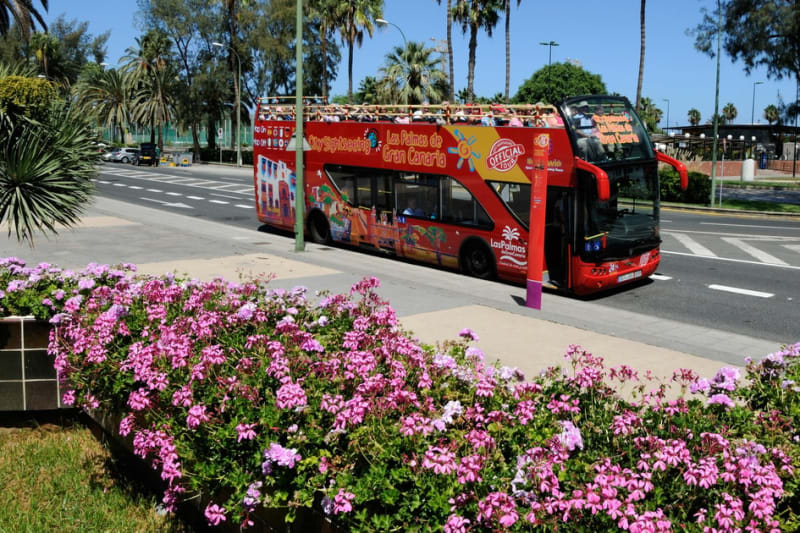
Las Palmas hop-on hop-off bus
A hop-on hop-off sightseeing bus round the city of Las Palmas.
Check availability
Poema del Mar aquarium, skip the line
Skip-the-line entry to the aquarium on the Las Palmas waterfront.
Check availabilityCrossing into Triana
Cross the road that follows the old ravine and the character changes at once. Where Vegueta is residential and quiet, Triana is a shopping district, and its streets are busier, its buildings taller and its ground floors given over to shops and cafés. On the Triana side of the crossing stands a large theatre named after the novelist Benito Pérez Galdós, a son of Las Palmas.
Galdós was born in Triana, and the house where he was born, on Calle Cano, is now a museum dedicated to him. It sits just off the main street, which makes it an easy stop on the way north for anyone who reads Spanish literature, or who simply wants to see the inside of a Triana town house.
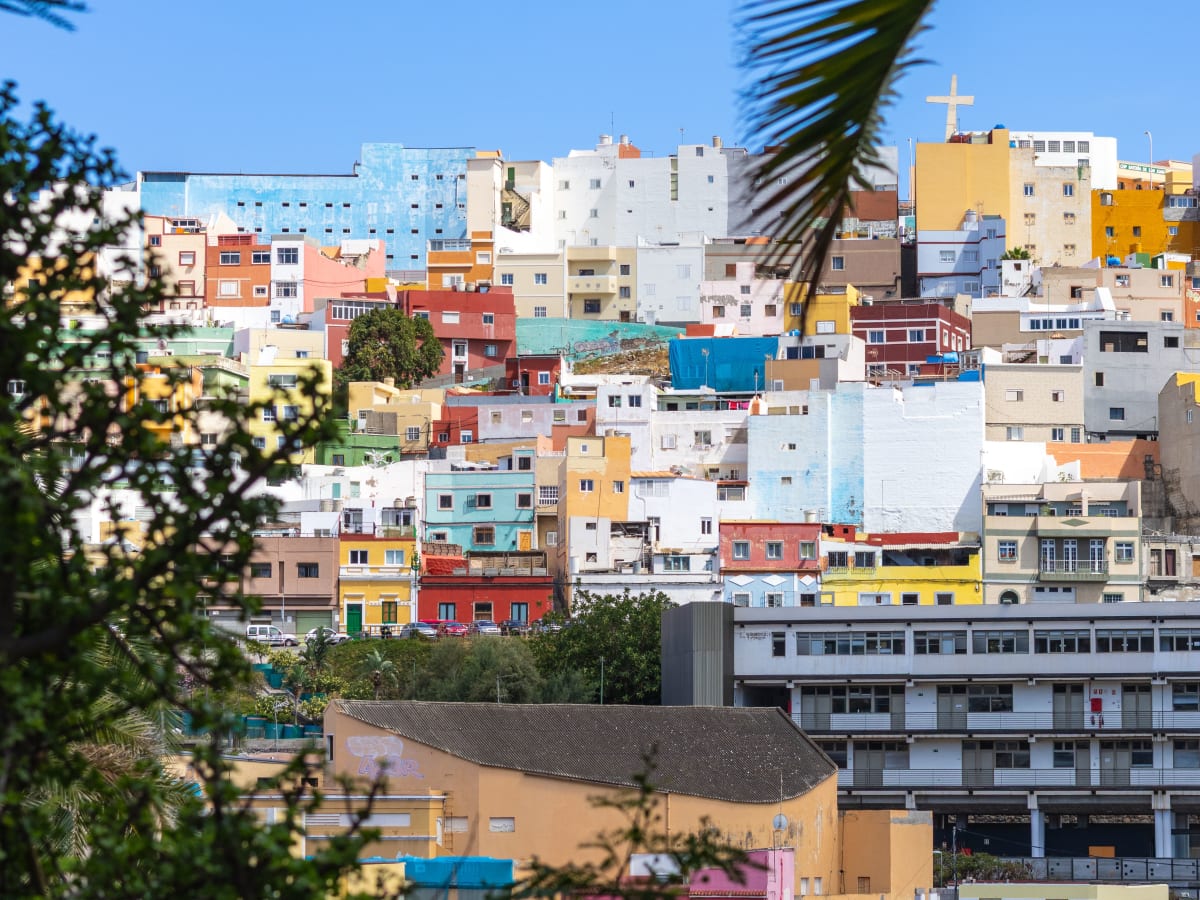
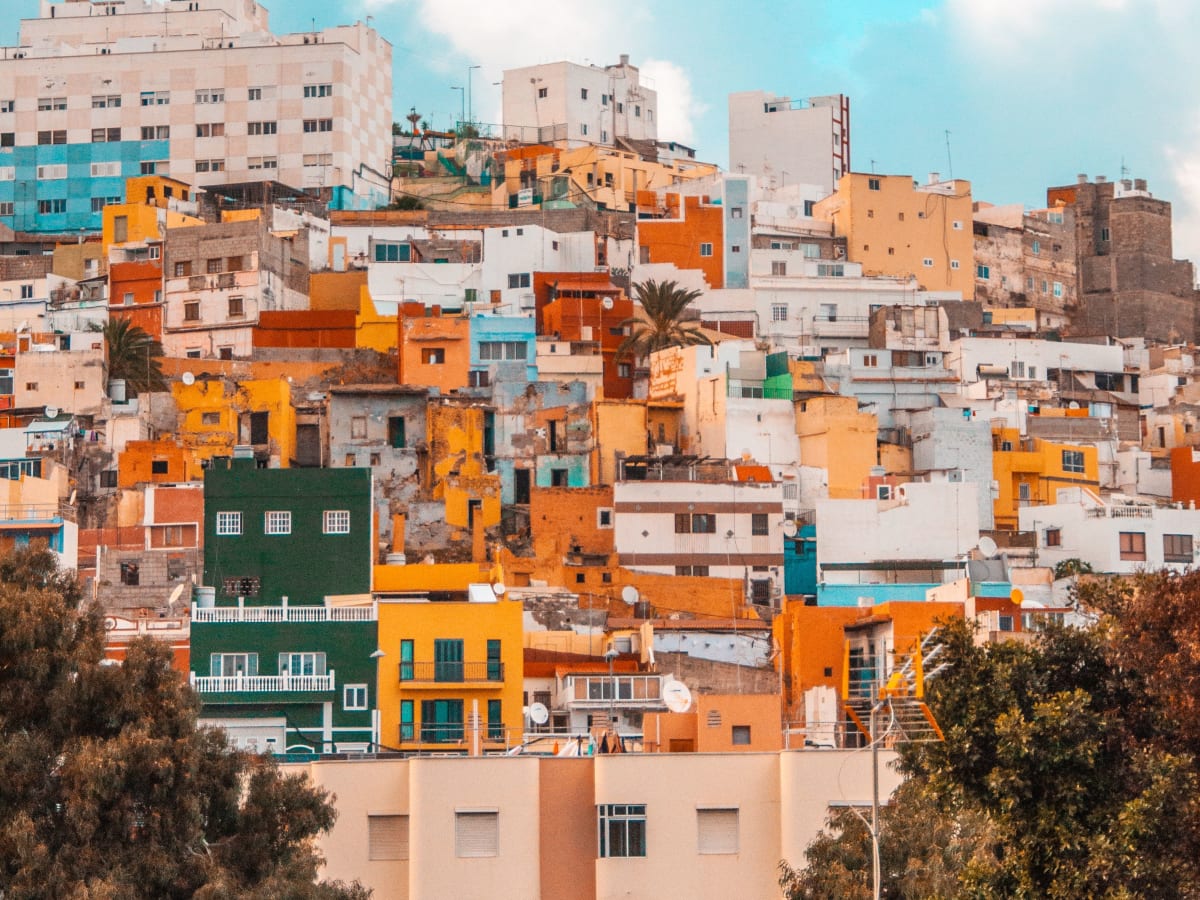
Look up the hillside to the west as well. Above Triana, the houses of the San Nicolás district climb the slope in stacked blocks of colour, and from the lower streets they make a backdrop to the whole quarter.
Calle Mayor de Triana and its side streets
The spine of the quarter is Calle Mayor de Triana, a long pedestrian street running north towards the park at San Telmo. It is a shopping street first, with chain stores, local shops and cafés at street level, but the buildings above them are the reason to look up: many of the fronts are far older than the shops in them, with decorative balconies, carved details and tall windows.
The side streets that cross it are often more interesting than the main street itself. They are narrower and quieter, with smaller shops, bars and terraces, and several of them are pedestrian too. Wander a block or two either side of the main street rather than walking its length in a straight line.
A short way off the main street, the Gabinete Literario, a grand old society building, stands on the Plaza de Cairasco, a small square beside a leafy promenade. It has one of the more elaborate facades in the city and is worth the detour, even seen only from the outside.
San Telmo and the end of the day
Calle Mayor de Triana ends at Parque San Telmo, a small park with palms, benches and a little chapel, and with the bus station beside it. It is the natural end of the walk, and for anyone who came by bus it is also the way home.
For drivers, the walk back to Vegueta takes the parallel streets rather than the main one, which shows a different slice of Triana on the return. An early evening drink in one of the squares, as the light goes and the streets fill with people finishing work, is a fair way to close the day before the drive back south.
A sensible order, in short
- Morning: the Plaza de Santa Ana and the cathedral, while the square is quiet.
- Late morning: the lanes of Vegueta, with one museum chosen in advance.
- Midday: the food market and lunch at the edge of Vegueta.
- Afternoon: cross into Triana, Calle Mayor de Triana and its side streets.
- Late afternoon: Parque San Telmo, then back through the parallel streets.
Arriving by bus, run the list backwards.
What to know before going
Shoes over style. The cobbles in Vegueta are uneven, and the day adds up to a good few hours on foot.
Carry water and plan for shade. The squares have trees; the narrow lanes mostly do not.
Do not rely on street parking. Two hours is the most a blue bay allows, and green bays are for residents only. A car park near Vegueta, chosen in advance, takes the stress out of the day.
Check the museums, not just the map. Opening days and times vary, and a closed door is the one thing that spoils a morning planned around it.
Treat the grey days as good days. Las Palmas looks north-east into the trade winds and gets more cloud than the south. A morning of cloud that would spoil a beach suits a day in the streets very well.


