Gran Canaria Airport, code LPA, is on the east coast of the island, in the municipalities of Telde and Ingenio. The code comes from Las Palmas and plenty of people call it Las Palmas airport, but it is not in the capital: Aena, which runs it, puts it 18 kilometres from Las Palmas de Gran Canaria and 25 kilometres from the tourist area in the south. It handled 15,826,553 passengers in 2025, more than any other airport in the Canary Islands, and it operates 24 hours a day, every day of the year.
That position is what makes arriving simple. The airport sits beside the GC-1, the motorway that runs down the east and south coasts, roughly between the capital and the resorts. The south coast, Las Palmas and the harbour at Puerto de Mogán are all reached on that one road, and none of them is far.
What varies is the way to cover the distance. There are four: a hire car collected on arrival, a private transfer booked in advance, a taxi, or the public bus. Each suits a different kind of trip, and each has a catch worth knowing before the plane lands.
One motorway, numbered exits
The GC-1, the Autopista del Sur, starts in Las Palmas and ends in the municipality of Mogán. Between the capital and the airport it is classed as an autovía, and from exit 16, the airport junction, it becomes an autopista. Its last section, from Tauro to Puerto de Mogán, opened in 2013. Leaving the airport, drivers join it heading north for Las Palmas or south for everywhere else.
The exits are numbered from the Las Palmas end, and the island's tourism board uses them in its directions to each resort: exit 37 for Bahía Feliz and San Agustín, exit 43 for Playa del Inglés and San Fernando, exit 46 for Maspalomas, exit 50 for Pasito Blanco and Meloneras, exit 62 for Puerto Rico and exit 68 for Puerto de Mogán, where the GC-200 turns down towards the sea. The exit number is worth more than the resort's name, because several resorts share one stretch of coast.
The general limit for cars on Spanish autopistas and autovías is 120 km/h. Drivers heading for the north coast rather than the capital itself need not go through Las Palmas at all: the GC-3 leaves the GC-1 at exit 4 and runs round the city to the GC-2 at Arucas, and more than half of its route is tunnels and viaducts.
Drive times from arrivals
These are routed drive times from the airport, taking the fastest car route, with the larger figure used wherever two measurements differed:
- Bahía Feliz: 20 minutes, 24.7 km
- San Agustín: 26 minutes, 30.7 km
- Playa del Inglés: 27 minutes, 31.1 km
- Las Palmas centre: 27 minutes, 25.6 km
- Maspalomas: 30 minutes, 35.1 km
- Meloneras: 31 minutes, 38.3 km
- Arguineguín: 33 minutes, 43.0 km
- Puerto Rico: 39 minutes, 48.6 km
- Teror: 44 minutes, 36.7 km
- Puerto de Mogán: 45 minutes, 54.8 km
- Agaete: 54 minutes, 55.6 km
- Roque Nublo: 66 minutes, 50.9 km
Two things stand out. The whole resort coast from Bahía Feliz to Meloneras is within about half an hour of arrivals, and Las Palmas is no further away than Playa del Inglés. And distance stops being a guide once the road leaves the coast: Roque Nublo is nearer the airport than Puerto de Mogán and takes 21 minutes longer, because the mountain roads are slow for their length.
These are free-flow times, so they assume a clear road. There is no measured figure for the GC-1 in heavy traffic, and around Las Palmas on a weekday morning or evening the motorway is busier than these times allow for.
Hire car, collected at the airport
For anyone who wants to see more of the island than one resort, the airport is the natural place to take a car. A car booked for airport collection is handed over at the airport, and the voucher carries the meeting instructions, which differ from one supplier to another. From there the resorts are the drive times above, with no second journey to make.
The catch that turns people away at collection is the card. Some cars require a physical credit card with embossed details in the main driver's name: not a card on a phone, and a debit card only where the booking says one is accepted. Whether a card is needed is set car by car and shown when booking and on the voucher, and the search can be filtered to cars that do not need one. Check it before paying, not on arrival.
The rental conditions ask for the driving licence itself, because copies and electronic licences are not accepted, and it has to stay valid until the end of the rental. Minimum age and driving experience are set per car too. Two more conditions bite on this island in particular. The car is allowed on paved public roads only, which rules out the dirt tracks of the interior, and some cars carry a daily mileage limit, which matters when a round trip from the airport to Puerto de Mogán is about 110 kilometres. The fuel goes back at the level it came out, and returning it fuller earns nothing back.
Some cars are delivered instead to an address inside a handful of south-coast resorts, which suits a visitor who arrives by transfer and wants a car for only part of the stay. That supply is small, so a particular car on particular dates is not a given.
Private transfer, booked ahead
A private transfer is a car and driver booked before travel for a fixed journey, waiting when the flight lands. It suits late arrivals, families with a lot of luggage, groups who can share one vehicle, and anyone who would rather not drive straight off a flight on unfamiliar roads. It also suits a visitor who plans to spend the week in one resort: there is no car to park for seven days and no fuel to return.
Travelling with small children, ask for child seats when booking. Spanish rules require children of 135 centimetres or less to use an approved child restraint suited to their height and weight, and in vehicles of up to nine seats they sit in the back unless one of a few exceptions applies.
The catch is the fixed arrangement. A transfer is booked against a flight and a time, so check what the booking says about a delayed or diverted flight, and keep the confirmation to hand on landing.
Taxi
A taxi needs no booking, which makes it the fallback when a flight lands late or a plan changes. It works well for the short runs: by the routed drive, Bahía Feliz is 20 minutes from the airport, San Agustín 26 and the centre of Las Palmas 27.
The fare rises with the distance, and the distances to the far end of the south coast are real. Puerto de Mogán is more than twice as far from the airport as Bahía Feliz by road, 54.8 kilometres against 24.7. For a long run, ask for an estimate of the fare before setting off rather than finding out at the end.
Public bus
Public buses, called guaguas in the Canaries, serve the airport and link it with Las Palmas and the south coast. The bus is the cheapest way off the airport and needs no booking.
Its limits are the ones any bus has. It stops along the way, so the journey takes longer than the drive times above, and a resort stop can be a long walk from the door with suitcases. Timetables change, so check the current one before travelling, particularly for a late arrival. For a light traveller staying near a main stop, it is a sensible way in.
Tours and Things to Do in Gran Canaria
Boat trips, island tours, walking tours and day trips across Gran Canaria, via GetYourGuide.
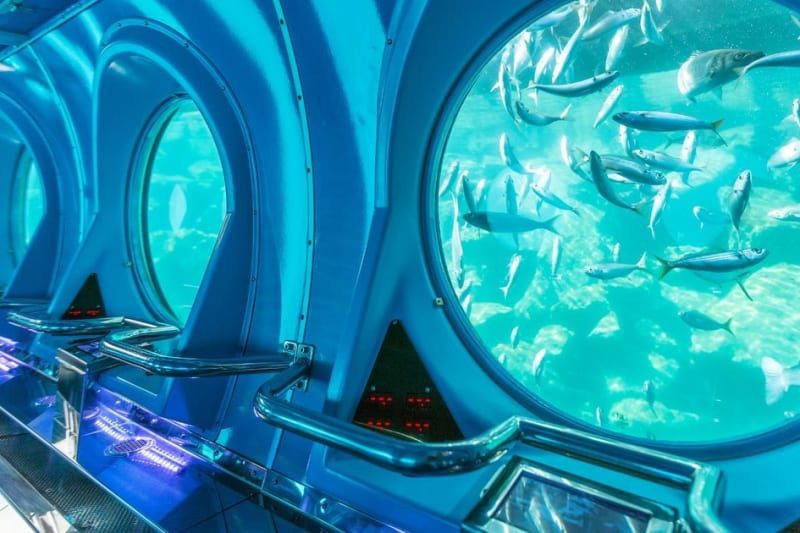
Submarine trip at Puerto de Mogán
A forty-minute submarine trip below the surface off Puerto de Mogán.
Check availability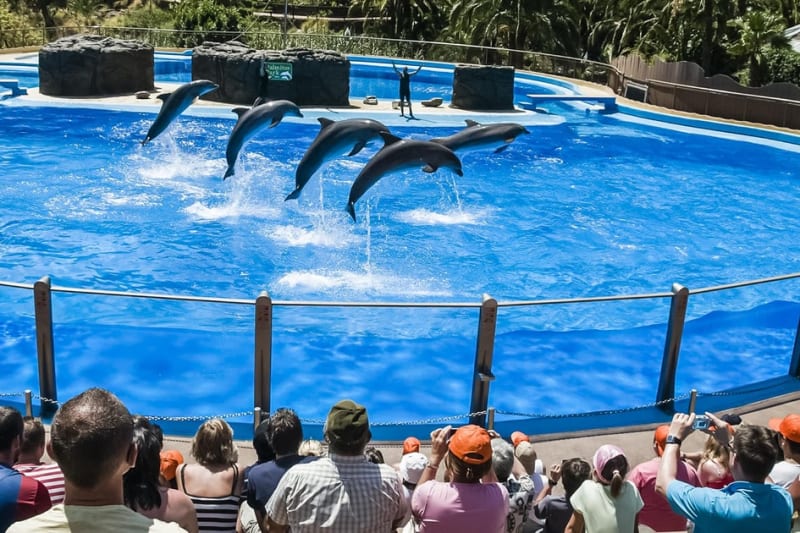
Palmitos Park with the dolphin and bird shows
Entry to the park in the hills above Maspalomas, with its dolphin and bird shows.
Check availability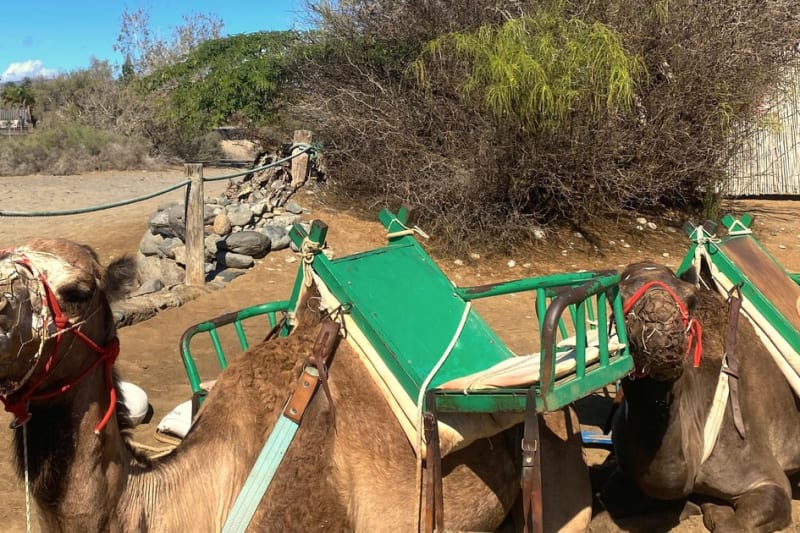
Camel ride in the Maspalomas dunes
A guided camel ride in the Maspalomas dunes.
Check availability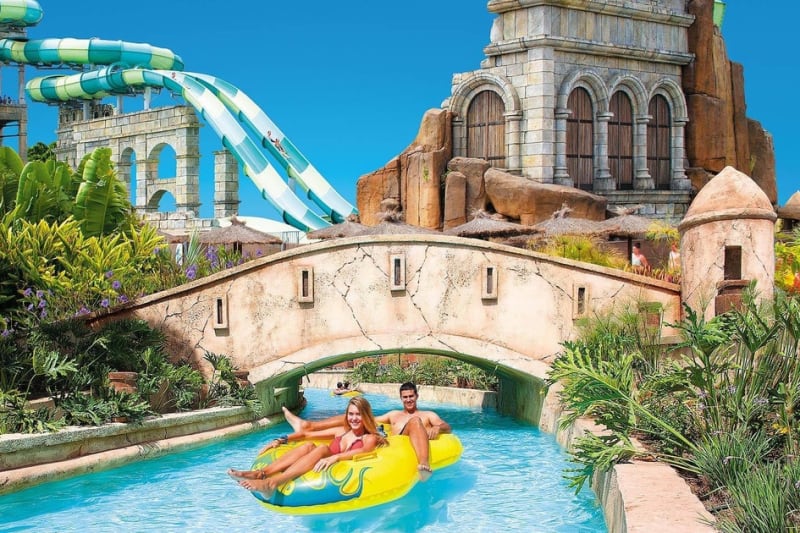
Aqualand Maspalomas entry
Entry to the water park in the hills behind Maspalomas.
Check availability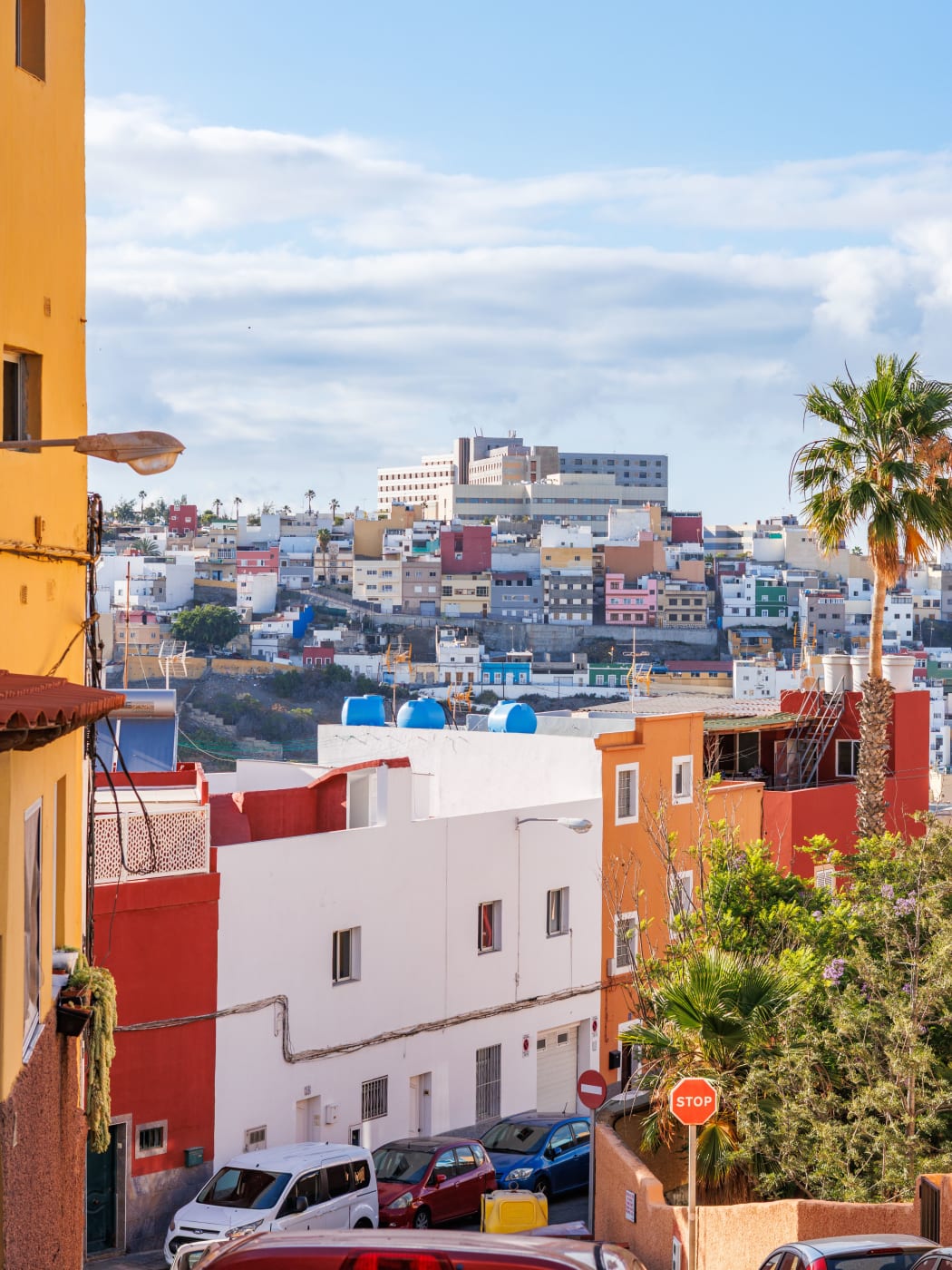
Las Palmas: close, but hard on a car
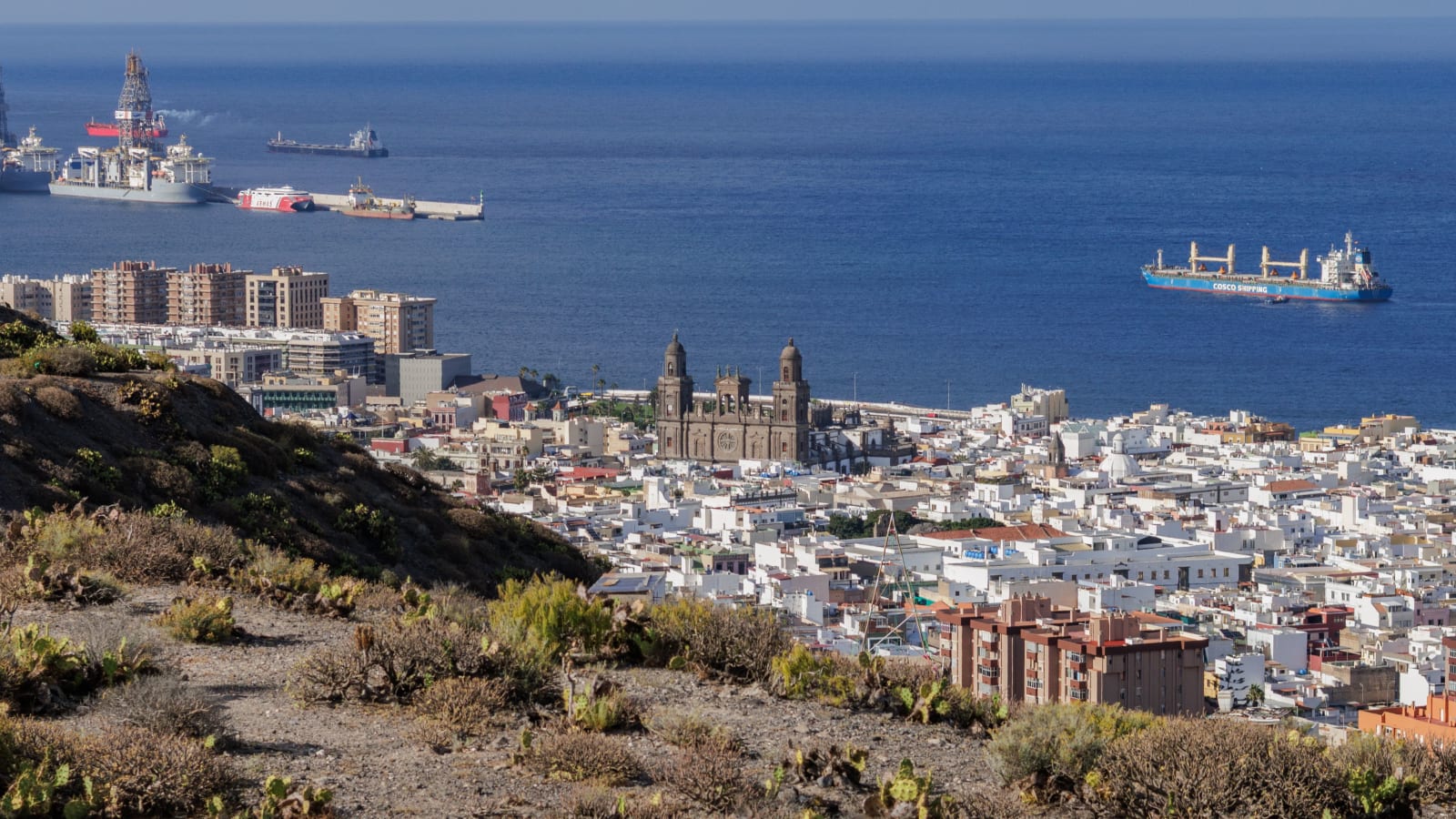
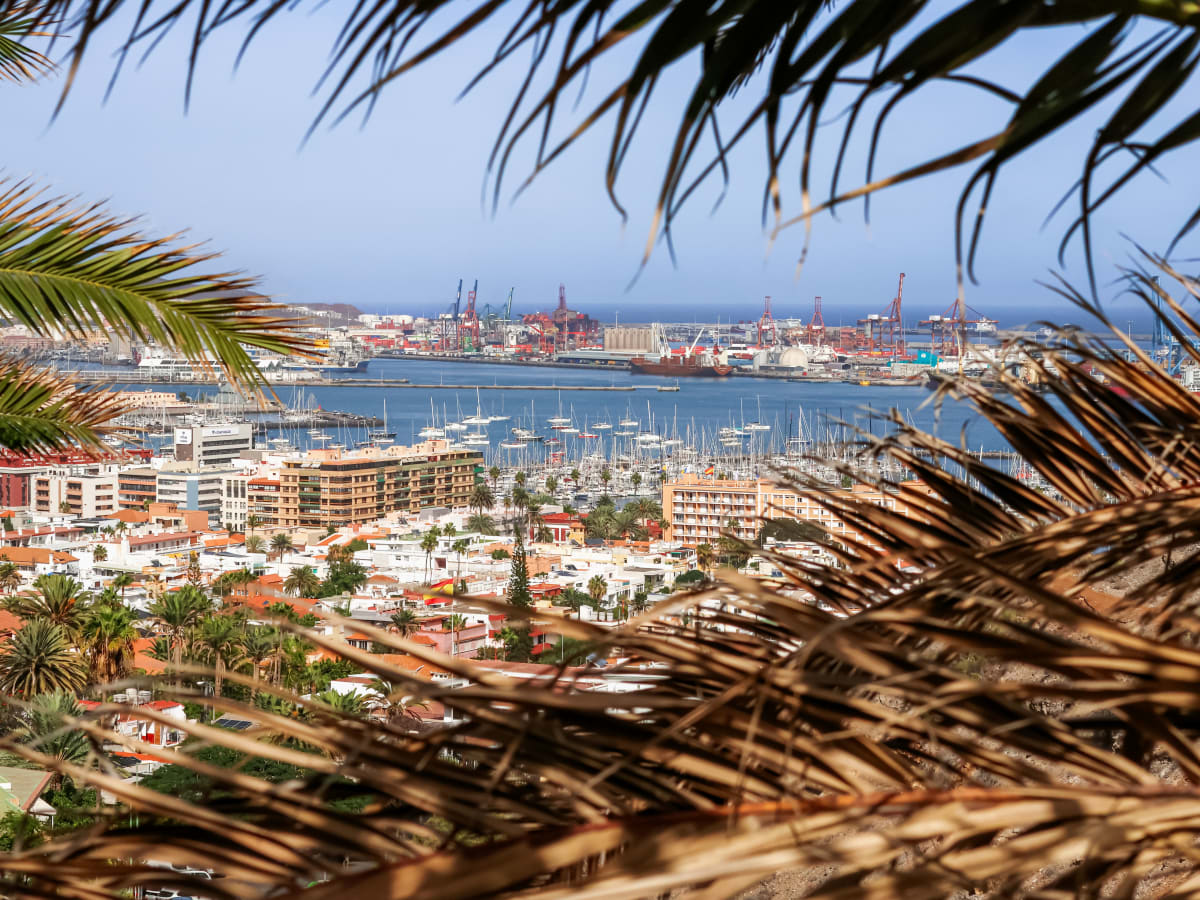
The capital is 18 kilometres from the airport by Aena's measure and under half an hour by the routed drive: 27 minutes to the centre, the same as Playa del Inglés. Despite the code on the luggage tags, the drive is north up the GC-1 along the coast, into a working port and a place where people live and work rather than a resort.
Arriving by car is easy; keeping one is not. Regulated street parking in the centre is marked in blue and paid, with a two-hour maximum, and green bays are for registered residents. For a stay in the old quarter or near Las Canteras, the city beach, a car mostly sits still and costs effort.
So the question for a city stay is what the car is for. Visitors planning several days out around the island will want it from the start and should plan where it will be parked overnight. Visitors on a city break with the odd excursion will find a taxi or the bus the simpler arrival, and Maspalomas is under fifty minutes down the GC-1 when the beach calls.
Maspalomas and the south coast
Most arrivals are heading here. The coast of San Bartolomé de Tirajana is promoted as Maspalomas Costa Canaria, and it runs as one continuous resort from Bahía Feliz and San Agustín through Playa del Inglés to Meloneras and Pasito Blanco. An address that says Maspalomas can sit anywhere along it, so match the hotel to its exit number before landing.
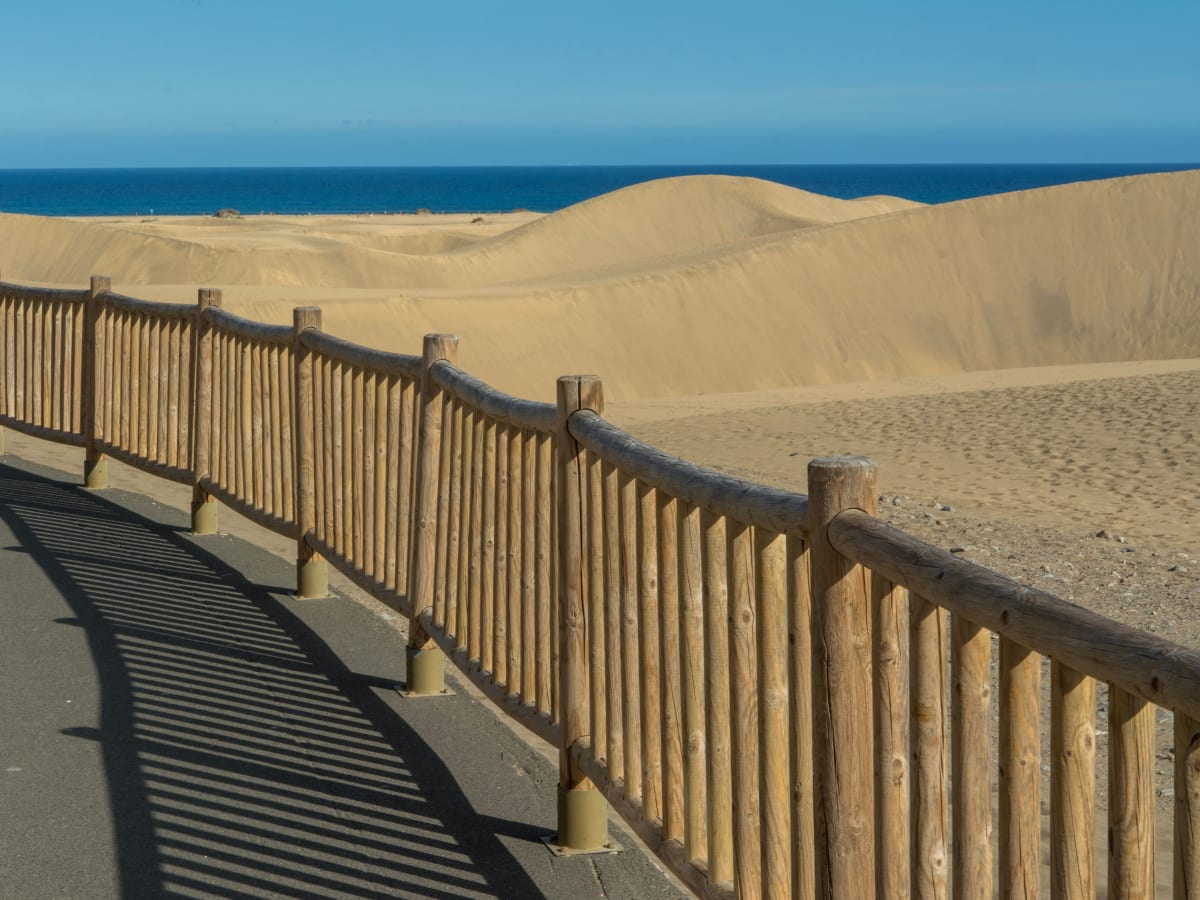
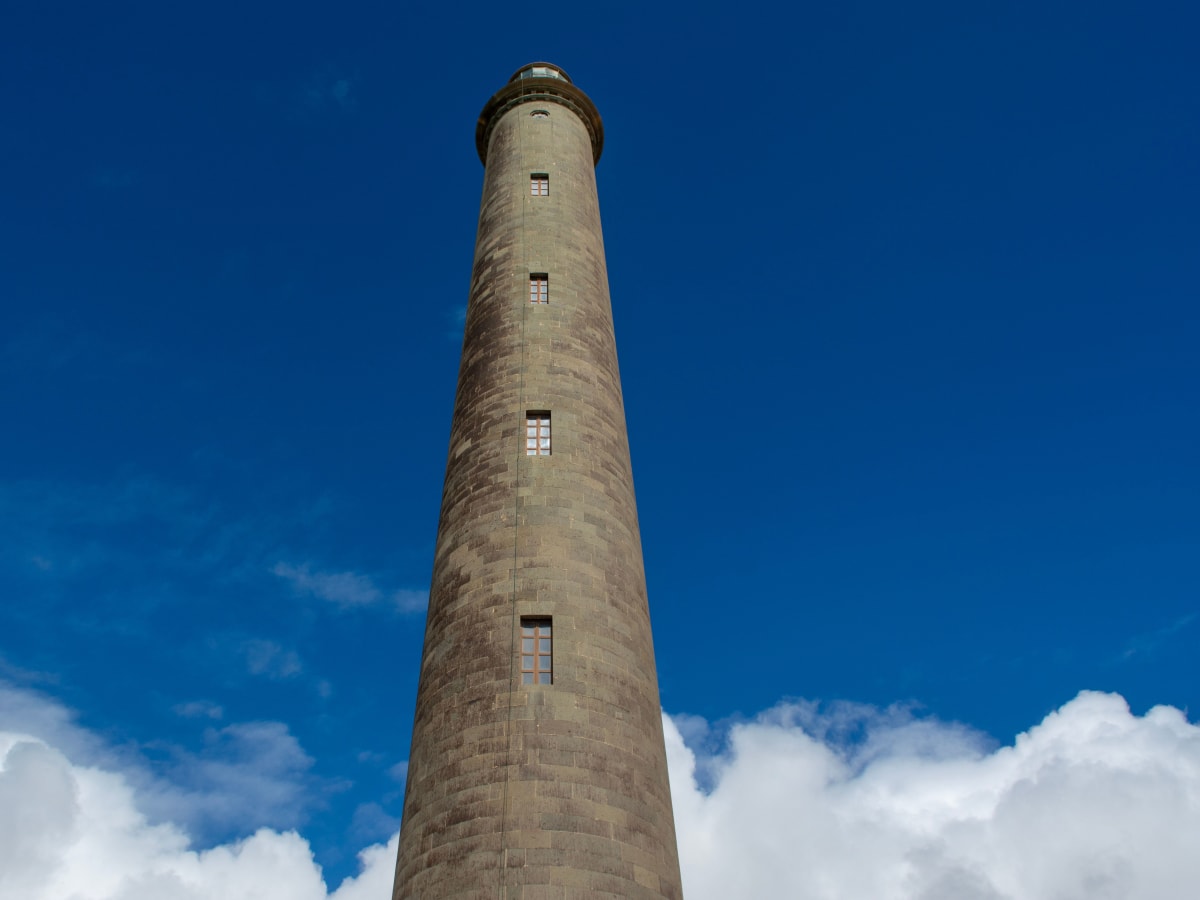
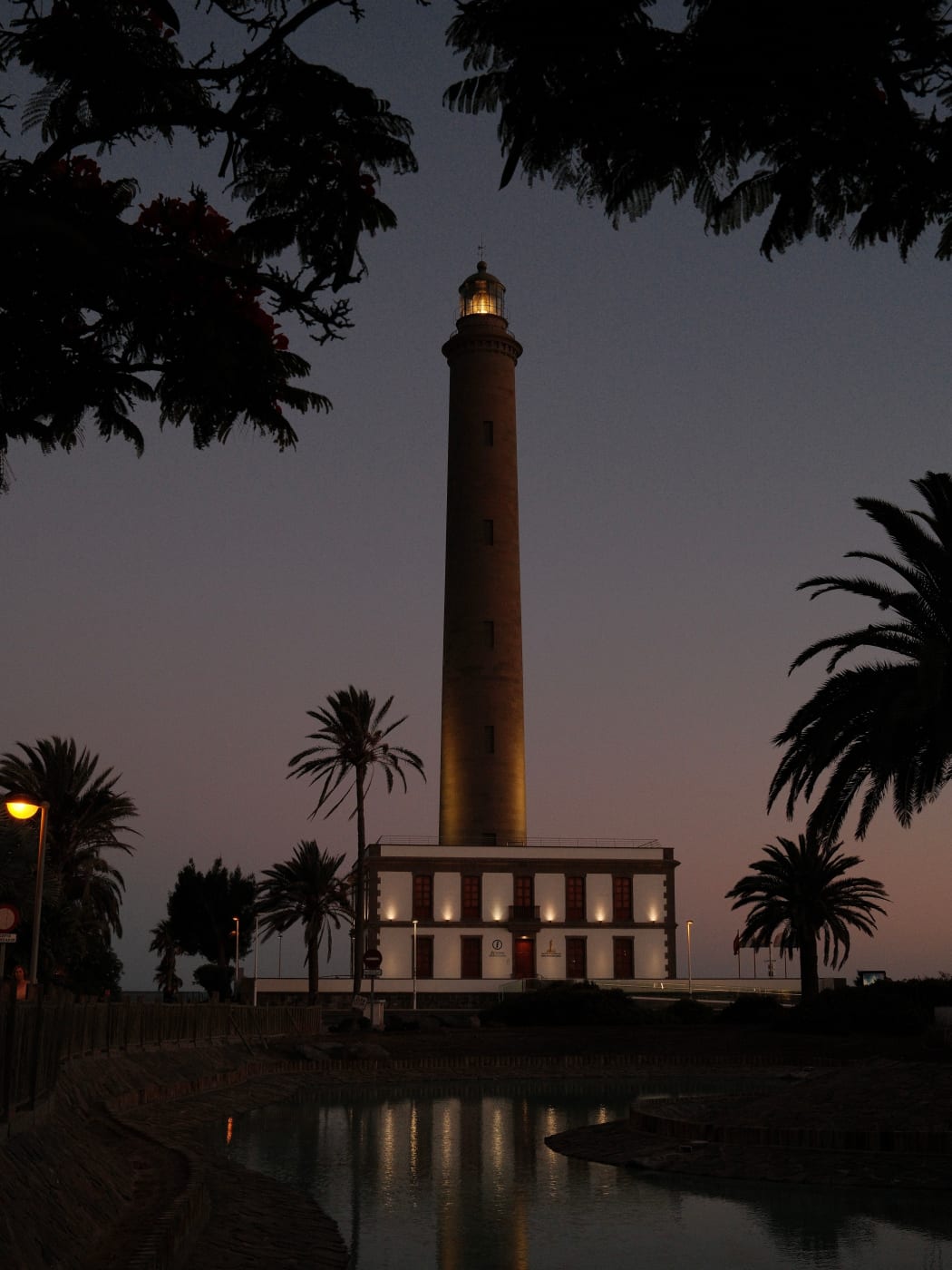
The drives are short: 20 minutes to Bahía Feliz, 26 to San Agustín, 27 to Playa del Inglés, 30 to Maspalomas and 31 to Meloneras. Within the strip the distances are smaller still, with Playa del Inglés to Maspalomas routed at 8 minutes. The Faro de Maspalomas, the lighthouse first lit in 1890, stands at the western end of the dunes, where Meloneras begins.
This is where the choice of transport matters least on the first day and most over the week. A transfer or a taxi covers the arrival easily because the distance is short. The reason to have a car here is the rest of the island, from Puerto de Mogán at the far end of the coast to the mountains above San Fernando, where the GC-60 starts its climb towards Tejeda.
Puerto de Mogán, at the end of the motorway
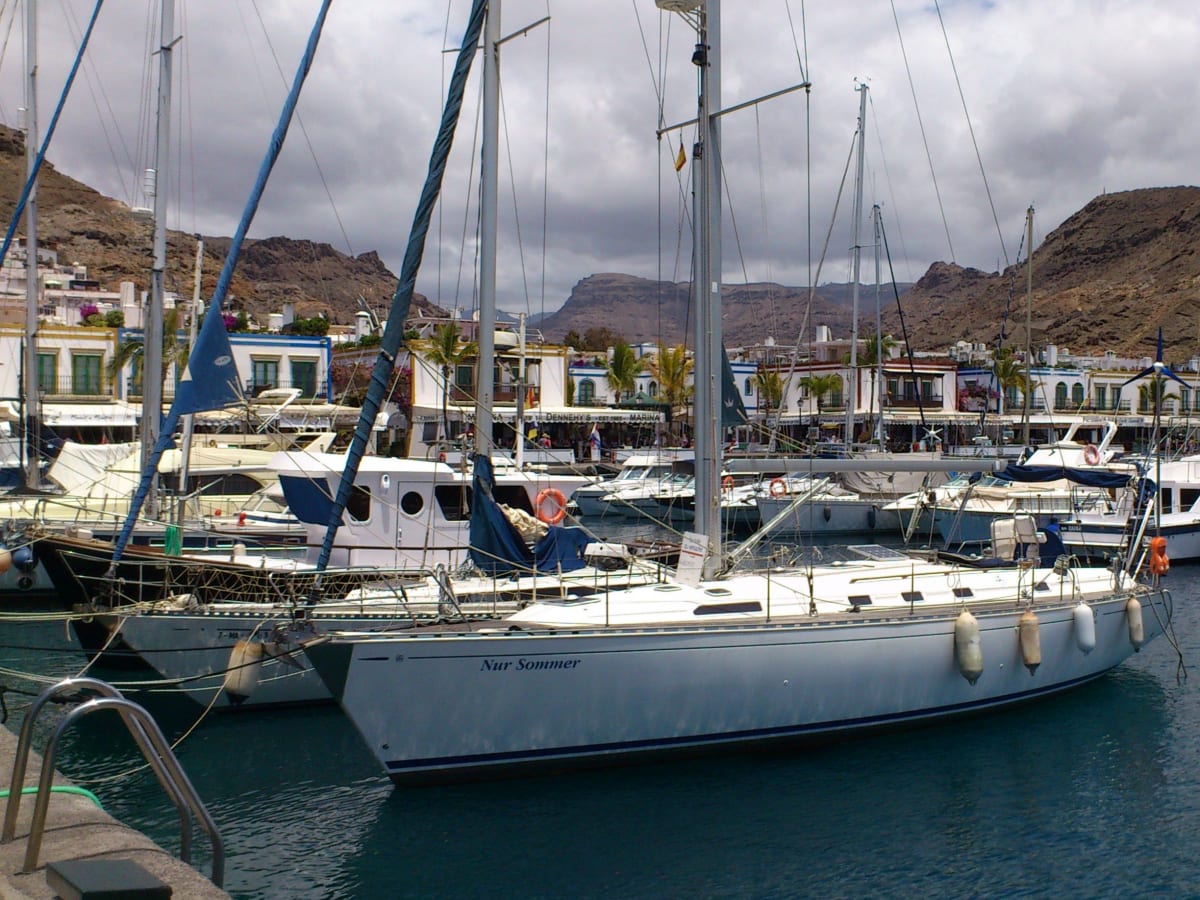
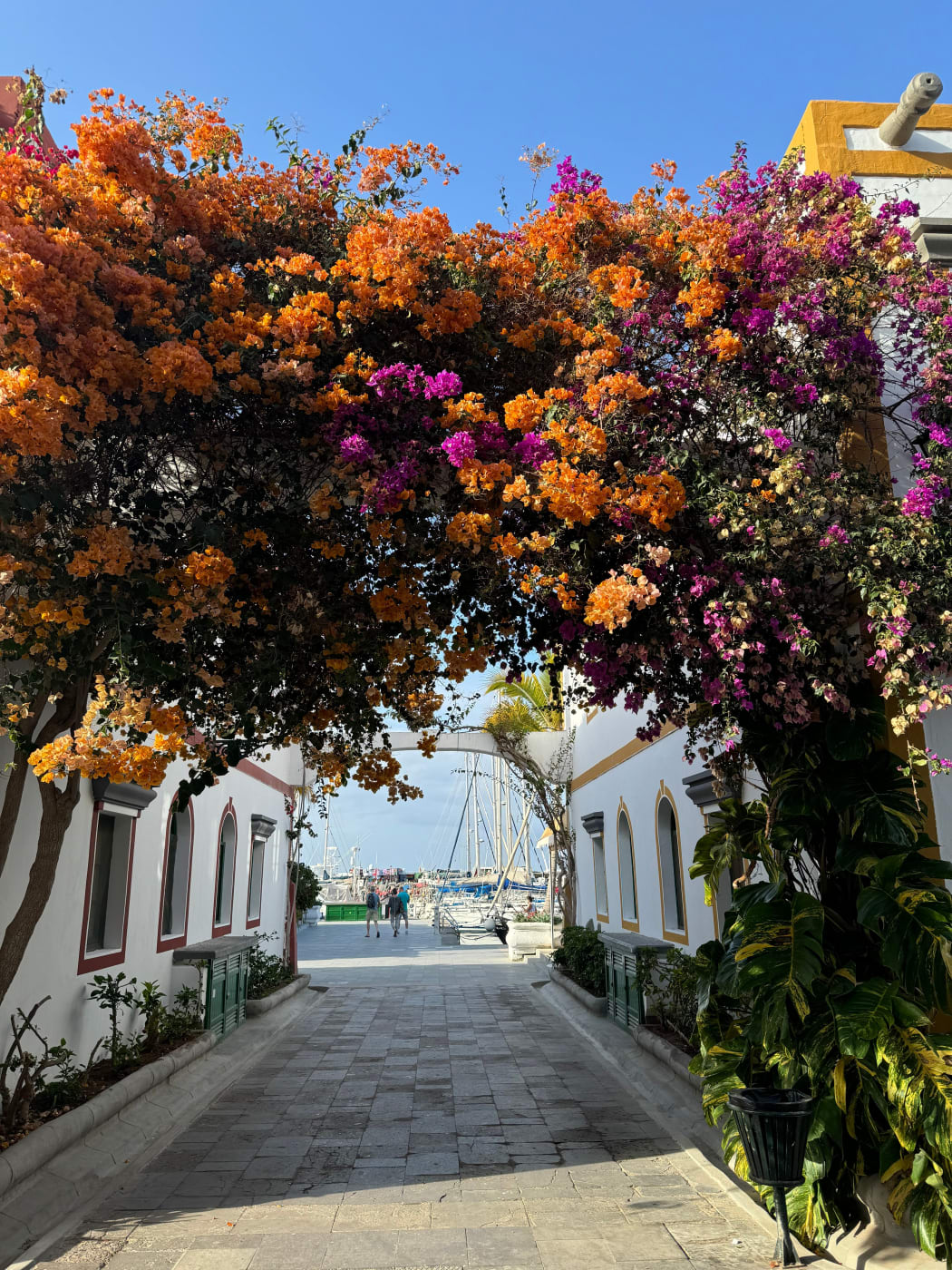
Puerto de Mogán is the far end of the run: 45 minutes and 54.8 kilometres from the airport, where the GC-1 finishes. The tourism board's directions are exit 68, then the GC-200 down towards the sea. On the way the motorway passes Arguineguín at 33 minutes and Puerto Rico at 39.
The harbour is small, built around canals and footbridges, which is why it is called the little Venice of Gran Canaria, and a week spent there does not need a car every day. For a stay-put holiday, a transfer to the door is the simple option. Drivers should know that Mogán charges for blue-zone street parking, with a ticket that has to show the car's number plate, and that the local press has reported about 130 white-marked spaces on the Explanada del Castillete and Rivera del Carmen as reserved for residents, so white paint is no promise of free parking here.
The Friday market is held on the Explanada del Castillete from 9:00 to 14:00, which is worth knowing for a Friday-morning arrival. Beyond the harbour, the GC-200 carries on up the west coast towards La Aldea, a road that has been closed by rockfalls after heavy rain, and the routed drive from Puerto de Mogán to Agaete goes back round the island and takes over an hour and a half.
Going home: timing the last drive
Routed in the other direction, the resorts are much the same distance from the terminal: Playa del Inglés 25 minutes, Maspalomas 28, Meloneras 29 and Puerto Rico 38, with the centre of Las Palmas at about half an hour. That puts the Maspalomas coast under half an hour from departures and Puerto Rico under forty minutes. Puerto de Mogán, the furthest of the resorts, is the one to leave most time for.
The catch for an early flight is the terminal itself. Aena closes it to the public at night: in those hours only passengers with a boarding pass and staff may go in, and passengers are admitted in the two hours before their flight's scheduled departure. A plan to drive down in the small hours and wait inside for a dawn flight does not work, so time the drive for that two-hour window instead.
A hire car goes back with the fuel at the level it left, with nothing refunded for returning it fuller. The fuel-price feed of the Ministry for Ecological Transition lists a station on the GC-1 at kilometre 16, at the airport, open 24 hours every day, and the ministry publishes live pump prices for every station in Spain, updated every half hour. On departure day, as on arrival, the drive times are free-flow figures, so leave room for traffic.